
The Deggendorf boiler house in Germany is a strong example of how infrastructure can become part of a wider sustainability strategy. Built to supply the Robert-Koch-Gymnasium with renewable heat energy, the project combines modern biomass heating with facade greenery supported by Stainless Steel Cable Mesh solutions. The result is a functional energy building that also contributes to environmental responsibility, visual quality, and greener urban design.
After a year of construction, the boiler house was successfully completed and put into operation as part of Deggendorf’s plan to expand renewable energy use across local schools. The project shows that even technical buildings can be designed with ecological value in mind.
A Renewable Energy Project for Deggendorf
The Deggendorf boiler house was created to provide sustainable heat for the Robert-Koch-Gymnasium. A biomass heating system was installed inside the facility, offering a renewable alternative to conventional fossil-fuel-based heating systems.
This makes Robert-Koch-Gymnasium the first school connected to the environmentally friendly district heating system. The district of Deggendorf plans to gradually connect additional schools to the system, further expanding the use of renewable energy.
This long-term strategy reflects a clear commitment to climate-conscious public infrastructure. Instead of treating sustainability as an added feature, the boiler house places renewable energy at the center of the project.
The Role of Stainless Steel Cable Mesh in Green Architecture
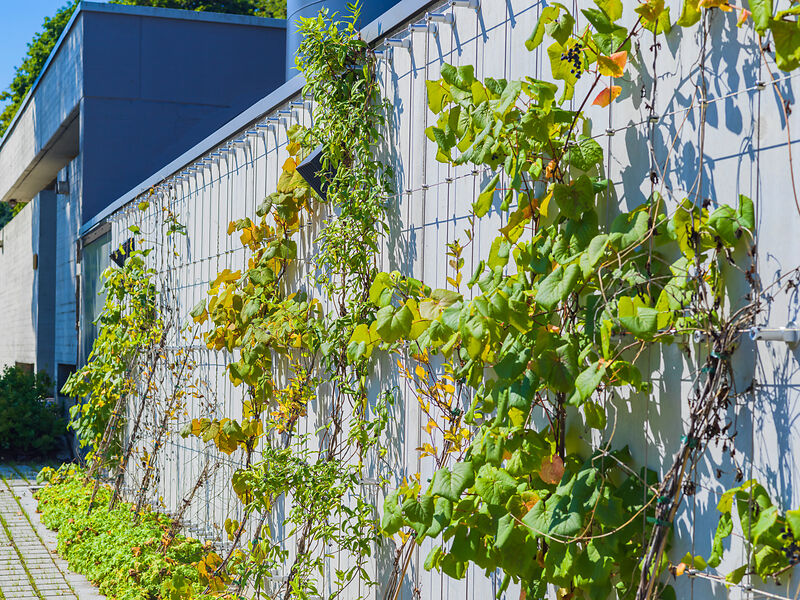
Although the main purpose of the building is energy supply, the facade design plays an important role in the overall sustainability concept. For the greenery system, the project uses GREENCABLE® Light, a stainless steel cable solution by Carl Stahl Architecture.
While GREENCABLE® Light is based on horizontal and vertical stainless steel cables rather than traditional mesh panels, it belongs to the same architectural family of stainless steel cable systems associated with Stainless Steel Cable Mesh. These solutions are widely used for green facades, climbing aids, fall protection, railing infill, and sustainable building envelopes.
At the Deggendorf boiler house, stainless steel cables were installed at optimal distances to support climbing plants as they grow across the facade. This creates a structured and durable framework for vegetation while maintaining a clean architectural appearance.
GREENCABLE® Light as a Climbing Aid
The facade greenery at the Deggendorf boiler house depends on a reliable climbing support system. GREENCABLE® Light provides that support through a network of horizontal and vertical stainless steel cables.
This system allows climbing plants to develop naturally and evenly. By guiding plant growth, the cable structure helps create a green facade that can improve the visual appearance of the technical building while supporting environmental performance.
Key advantages of GREENCABLE® Light and Stainless Steel Cable Mesh solutions include:
- Durable stainless steel construction
- Weather-resistant performance
- Low-maintenance design
- Support for climbing plants
- Clean and lightweight appearance
- Compatibility with sustainable architecture
- Long service life for exterior applications
Because stainless steel is strong and resistant to outdoor conditions, it is ideal for facade greenery systems that must perform over many years.
Making Technical Buildings More Sustainable
Boiler houses, energy centers, and utility buildings are often designed primarily for function. However, the Deggendorf boiler house proves that functional infrastructure can also support sustainable architecture.
The combination of renewable heat production and facade greenery creates a more complete environmental concept. The biomass heating system reduces dependence on fossil fuels, while the green facade helps soften the building’s appearance and strengthen its ecological identity.
With the help of Stainless Steel Cable Mesh-related systems, technical buildings can become more attractive, more integrated into their surroundings, and more aligned with modern climate goals.
Environmental Benefits of Facade Greenery
Green facades are becoming increasingly important in sustainable construction. They allow buildings to contribute to healthier urban and public environments.
At the Deggendorf boiler house, climbing plants supported by stainless steel cable systems can offer several benefits:
- Improved visual integration into the environment
- Natural shading of facade surfaces
- Better microclimate around the building
- Support for biodiversity
- Potential reduction of heat buildup
- Enhanced public perception of infrastructure
- Connection between technology and nature
The facade greenery does not replace the energy function of the building—it complements it. Together, the biomass heating system and plant-covered facade create a stronger sustainability message.
Stainless Steel Cable Mesh for Long-Term Performance
Sustainability also depends on the durability of the materials used. Stainless Steel Cable Mesh and stainless steel cable systems are valued in architecture because they are strong, corrosion-resistant, and suitable for long-term exterior use.
For green facade projects, this is especially important. Climbing plants need stable support as they grow, change with the seasons, and increase in density. The support system must resist moisture, wind, temperature fluctuations, and biological growth.
Stainless steel cable solutions provide the required reliability without visually overwhelming the facade. Their slim structure allows the greenery to become the main visual feature while the support system remains discreet and effective.
A Model for Public Sustainability Projects
The Deggendorf boiler house is not only a building—it is part of a larger regional energy transition. By connecting schools to renewable heat, the district is investing in a cleaner future for students, communities, and public institutions.
Adding facade greenery supported by Stainless Steel Cable Mesh-related technology reinforces this message. It shows that sustainability can be visible, educational, and practical at the same time.
For schools, this type of project can also serve as a learning example. Students can see how renewable energy, green architecture, and responsible material choices work together in real life.
Why Architects Choose Stainless Steel Cable Systems
Architects and planners often choose stainless steel cable systems for green facades because they provide a balance of strength, simplicity, and design flexibility. They can be adapted to different building sizes, plant types, and facade concepts.
For projects like the Deggendorf boiler house, the benefits are clear:
- The system supports healthy plant growth.
- It improves the building’s exterior appearance.
- It performs reliably in outdoor conditions.
- It aligns with sustainability goals.
- It requires limited maintenance.
- It supports long-term ecological design.
These qualities make Stainless Steel Cable Mesh and related cable systems valuable tools for sustainable construction.
Deggendorf Boiler House – Conclusion
The Deggendorf boiler house demonstrates how renewable energy infrastructure can be combined with green facade design to create a more sustainable public building. With its biomass heating system, the facility supplies Robert-Koch-Gymnasium with environmentally friendly heat and supports Deggendorf’s plan to expand renewable energy across local schools.
At the same time, GREENCABLE® Light and Stainless Steel Cable Mesh solutions provide a durable climbing aid for facade greenery, helping plants grow while enhancing the building’s appearance and ecological value.
This project proves that sustainability is strongest when technology, architecture, and nature work together. The Deggendorf boiler house is a practical model for future public infrastructure—efficient, green, and built for long-term environmental impact.